Wildlife from in and around the garden in Cape Town
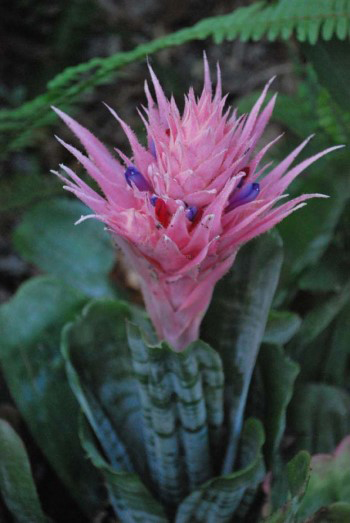
Aechmea fasciata. Bromeliad.
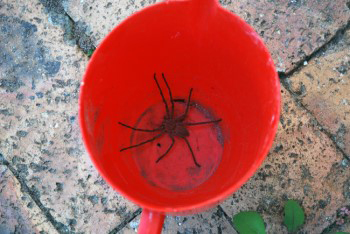
The Common
Rain Spider (Palystes superciliosus). Leg span is about 90mm. Rain spiders
bite if disturbed!!
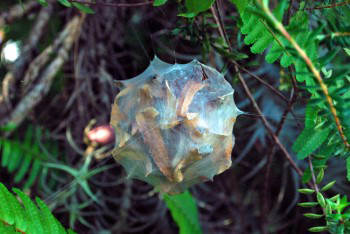
Egg sac
of the Common Rain Spider. The female usually guards the sac for a few weeks
until young eat their way out.
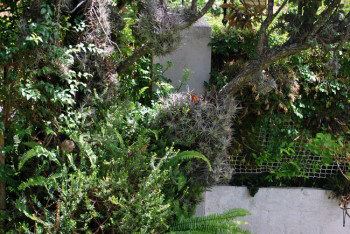
Spot the egg sac?
.jpg)
The Common Rain
Spider (close up!)
2.jpg)
Size matters!
WithEggSac.jpg)
Spot the Rain
Spider with egg sac in the Clivias? See below,
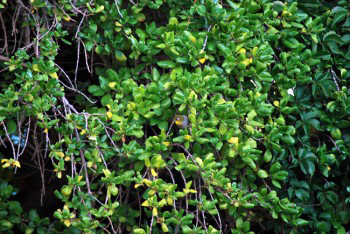
Spot the
bird in the bush? (it's a tiny Cape White Eye with an orange berry in its
beak)
withEggSac2.jpg)
Surprise! Look out. She's got her eyes on you!
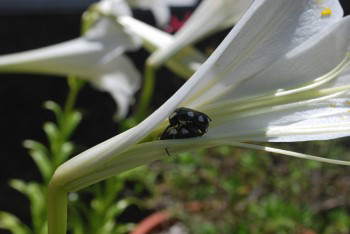
Gilding
the Lily? Two White Spotted Fruit Chafer beetles, enjoying each others company,
inside a St Joseph's Lily flower.
.jpg)
An American cockroach (Periplaneta americana).
Cockroaches are very common in Cape Town, it being a port.
This is the largest but there are German and Oriental cockroaches too.
%20South%20Africa.jpg)
A Thomisus (flower crab spider) gets its name because they
move sideways like a crab,
They also hold up their front legs in defence, just like a crab.
%20with%20prey.jpg)
They prey on flower pollinating insects like this honey bee.
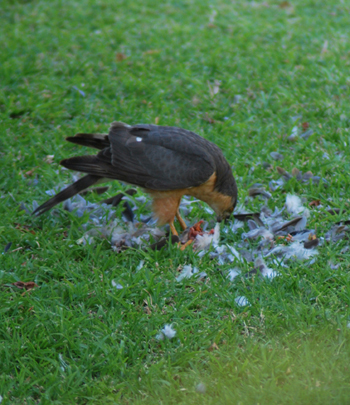
A Red Breasted Sparrowhawk with prey in our back garden.
It is very rare to see these birds feeding on the ground.
There is a video here.
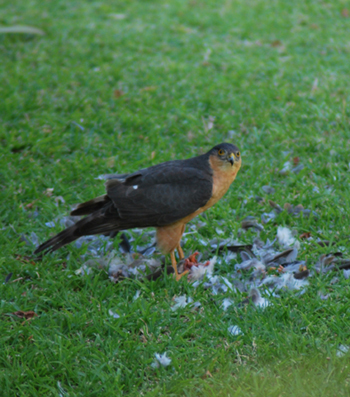
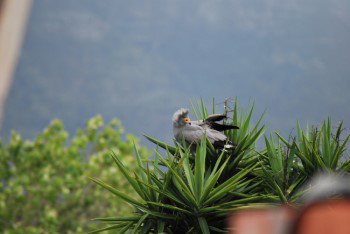
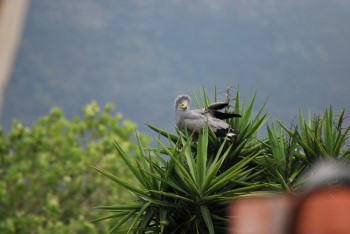
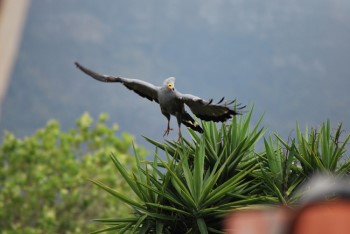
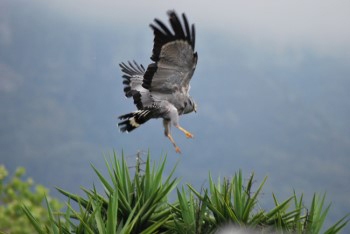
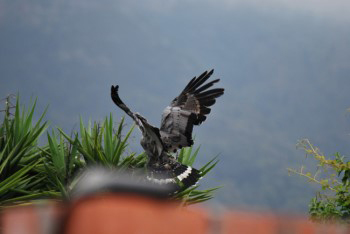
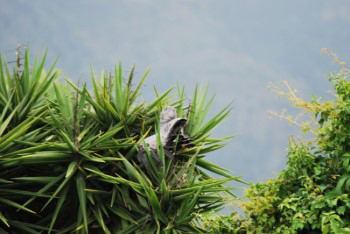
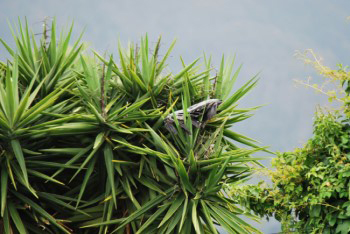
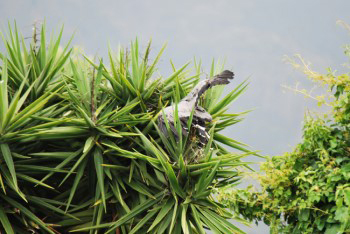
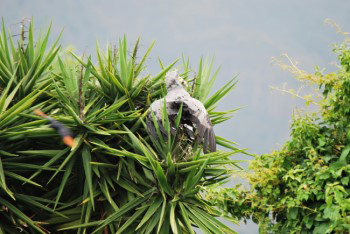
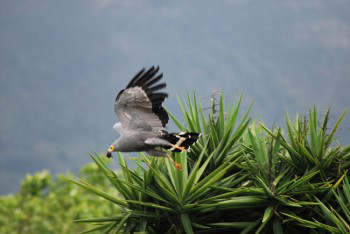
The Gymnogene (also known as the African Harrier-Hawk) is a fairly common resident and a cunning and acrobatic predator, especially of other birds and their nests.
When the Gymnogene gets excited it raises it's neck feathers into a hood and the yellow face flushes to orange.
The following pictures show a dramatic raid by the Gymnogene on the nest of a Red Wing Starling hidden inside the head of a Yucca tree but the sharp spiked leaves of the Yucca do not deter the oncoming attack.
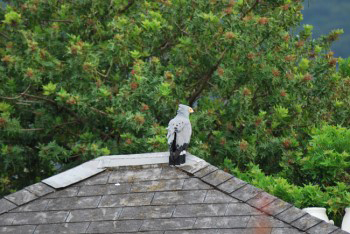
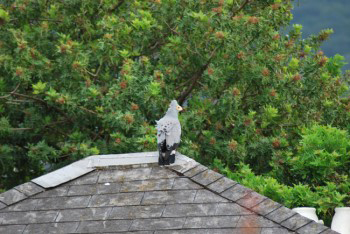
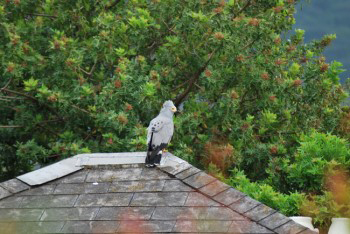
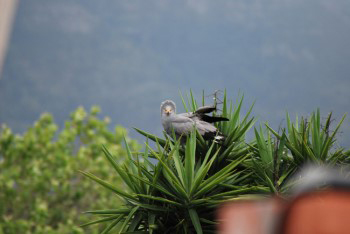


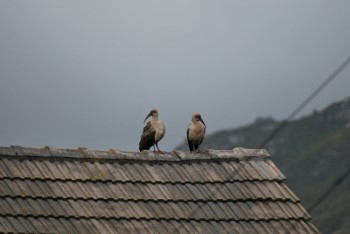
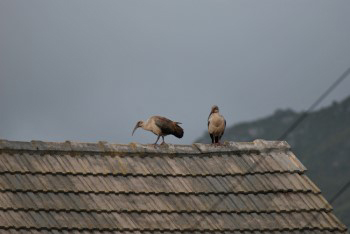
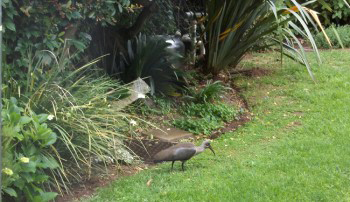
The Hadeda
Ibis are frequent visitors to the garden.
.jpg)
Egyptian goose (Alopochen
aegyptiaca)
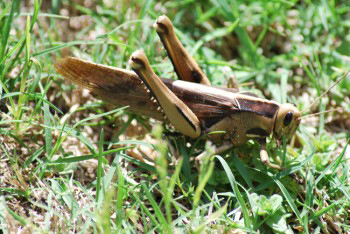
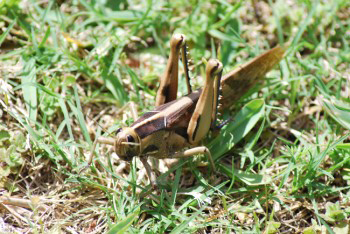
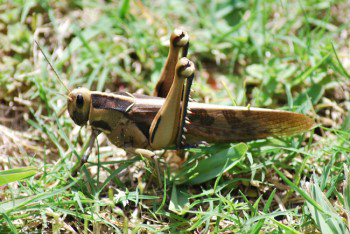
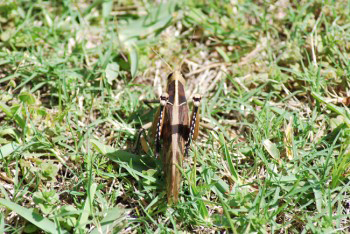
Acanthcris
ruficornis (a.k.a. African Grasshopper
or Garden Locust)
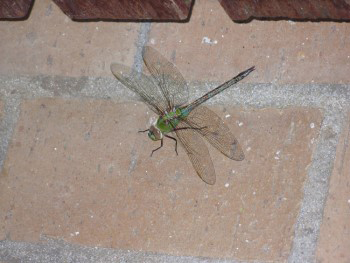
Adult Green
Dragonfly.

Adult African
Praying Mantis.
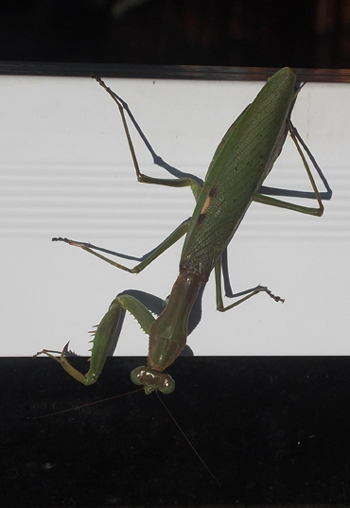
Common green mantis, African
mantis, praying mantis
African
Praying Mantis Nymph.
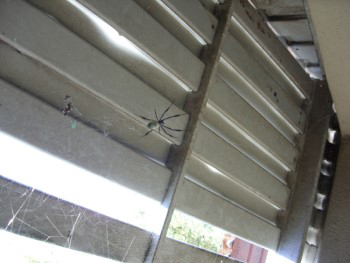
Nephila
fenestrata, the Black-legged Nephila spider
or Golden Orb spider. This is the female.
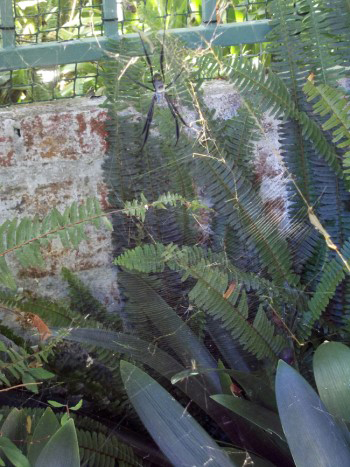
Nephila
fenestrata, the Black-legged Nephila spider
or Golden Orb spider. Female
with much smaller (grey) male (directly below her) on the web.
The female spider is big enough to prey on small birds that tangle in the
web.
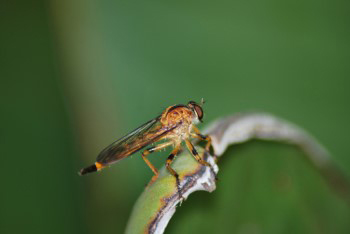
The Cape
Robber Fly is a very aggressive predator of other insects.
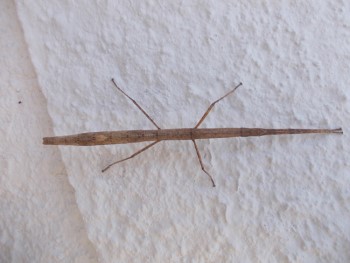
Carausius
morosus. This stick-insect
has six legs but is shown here with its front two legs held together.
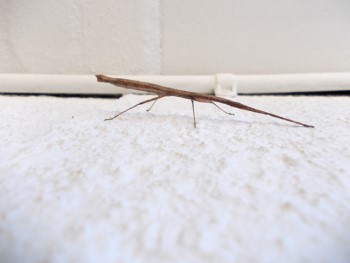
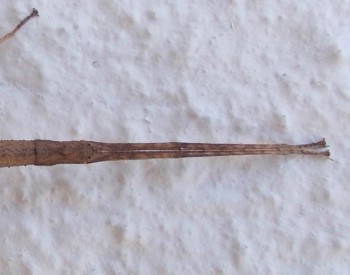
Close up
of Carausius morosus
Appreciation to Mr Paul Brock of the Natural History Museum,
London
for helping me to correctly identify this species of stick insect.

Trachylepis
Capensis, Cape Skink or Cape Three Lined
Skink hiding up in hedge to ambush prey, or....
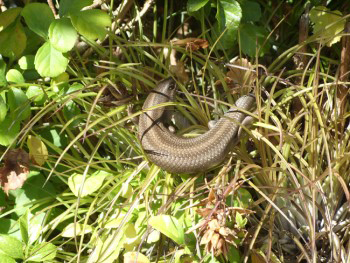
.. just
a nice place to sunbathe!
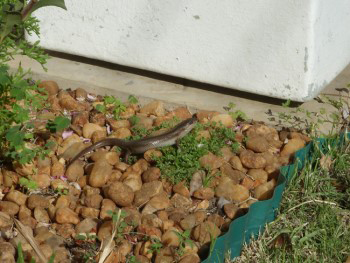
Note the smooth
shiny skin.
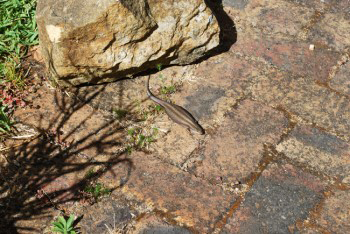
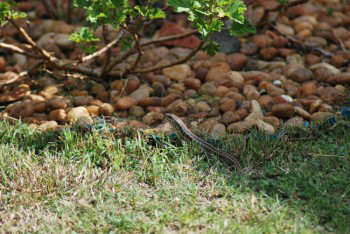
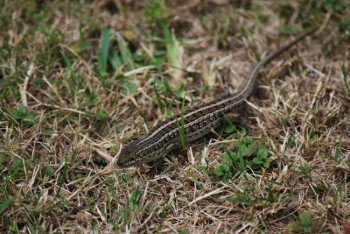
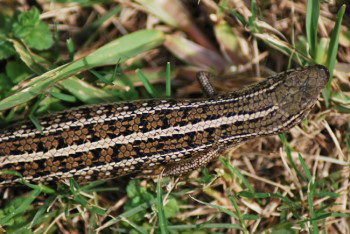
The skink has changed skin. These delightful
wild skinks are harmless and quite tame.
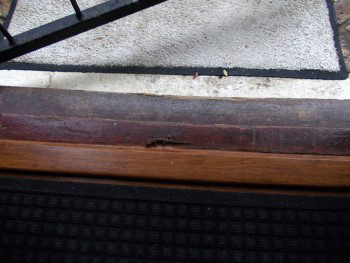
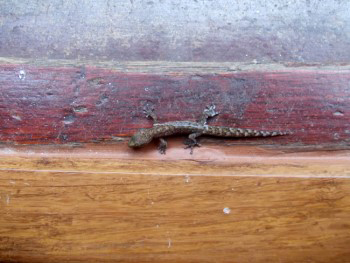
Hemidactylus
frenatus, Common House Gecko. The master of camouflage.
The ultimate "blendo" artist shedding a skin.
_beetle_photograph_by_martin_lovis_dsc_0022.jpg)
White-Spotted Fruit Chafer (Mausoleopsis amabilis)
feeding on one of my White Gazanias!
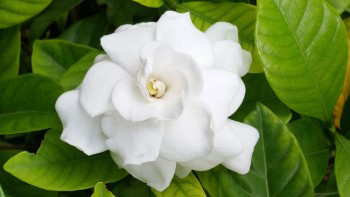
Gardenia flower.
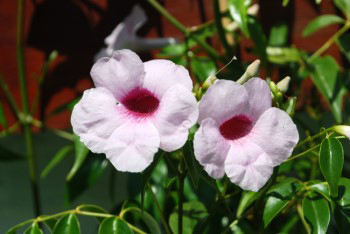
Pink Jasmine.
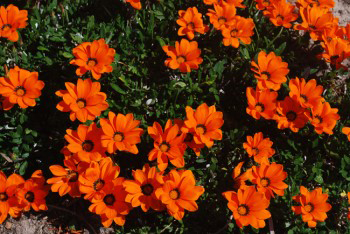
Orange
African Daisies.
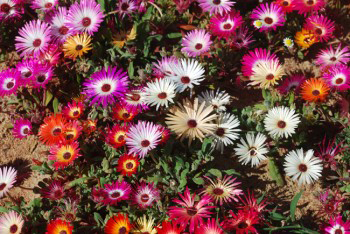
Multicoloured
Bokbaai Vygies.
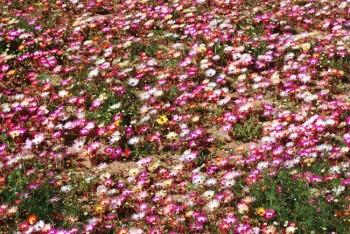
Multicoloured Bokbaai Vygies.
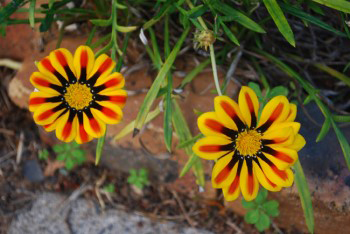
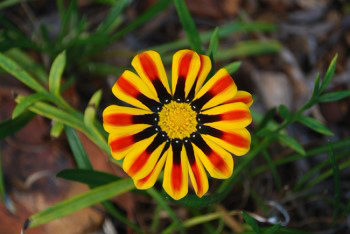
Gazanias.
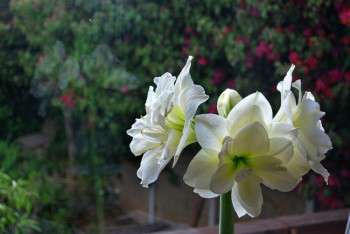
Amaryllis
(Mavis).
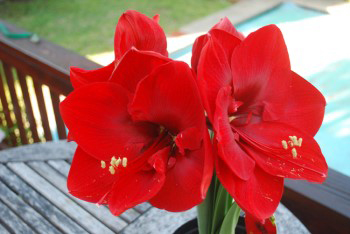
Amaryllis (Chadwick).
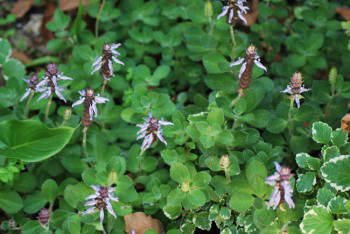
Plectranthus
neochilus - purple- (a.k.a. Smelly Spur Flower) is a "water
wise" ground cover plant.

Encore
Azalia.
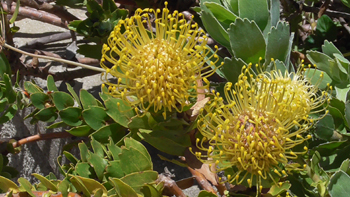
Pincushion Proteas are part of the Cape Fynbos floral kingdom.
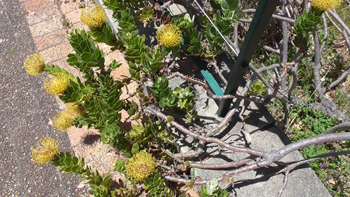
Spot the big hairy caterpillar?
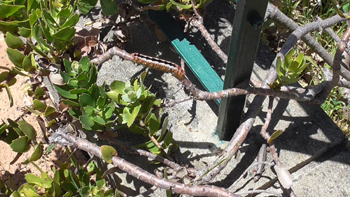
Spot the big hairy caterpillar and a cape three lined skink?
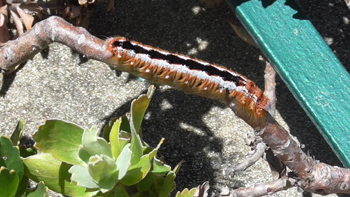
The hairy caterpillar is Eutricha capensis - the Cape lappet moth.
The three lined skink is on the ground just above the word three above.
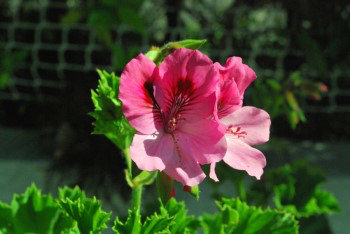
African Geranium (Perlargonium) is indigenous to
South Africa.
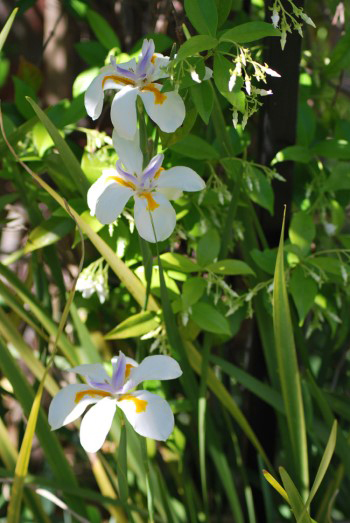
Dietes Grandiflora African Iris.

Brunfelsia
pauciflora - Yesterday-Today-and-Tomorrow.
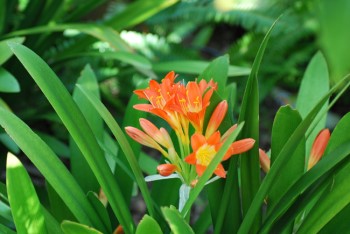
Orange flower Clivia.
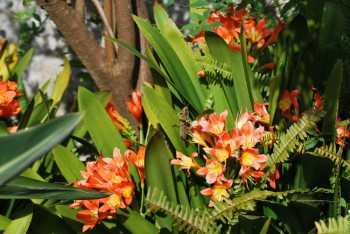
Clivia
with Garden Locust ...so this is what nibbles the Clivia's!!!
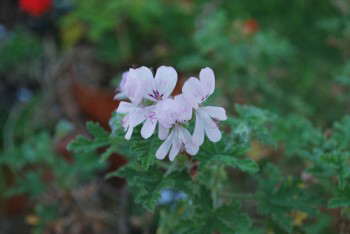
Pink flower
lemon scented Geranium.
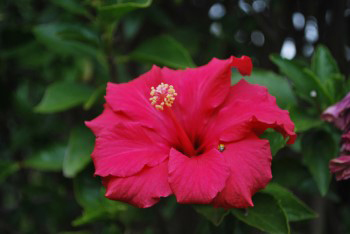
Hibiscus
rosa-sinensis - China Rose or Rosemallow with orange no-spots
Ladybug.
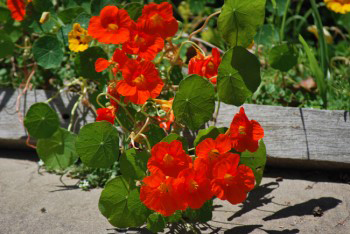
Nasturtiums.
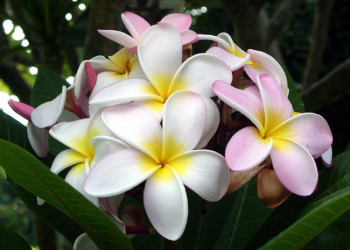
Plumeria
Frangipani flowers.
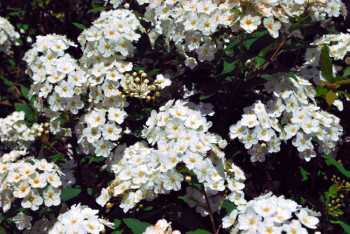
Pyracantha
saphyr orange, a highly scented shrub that
produces little pale yellow berries.
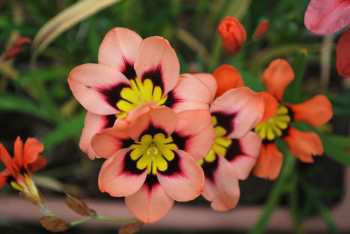
Sparaxis,
Harlequin Flower.
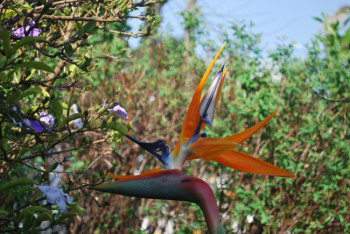
Strelitzia
reginae - Bird of Paradise or Crane Lily.
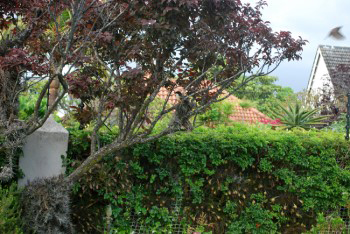
The Southern
Boubou (predator bird) in Purple Leaf Plum tree
(look in the center of the picture
in front of terracotta roof tiles where you will see the Boubou with its white
upper and orange colour under belly)
as a Cape Robin swoops past, in the top right of the picture,
trying to scare the Boubou away.
The Boubou can vary its call from shrill whistles to twanging like sounds
that resemble the telephone connections of a fax machine!
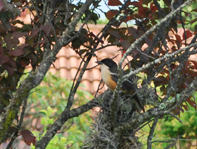
The Southern Boubou.
-------------------------
Visit the Martin Lovis website Home Page - HERE
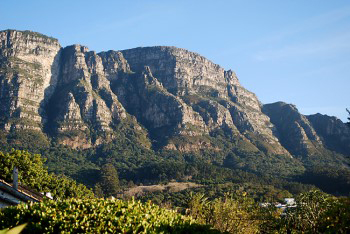
Table
Mountain - east side

Hawking at traffic lights - a common (illegal) sight, Cape Town, 2022.
-----------------------------------
© Martin Lovis, 2015-2026. All Rights Reserved.